What it is
The home screen of my TV is a live model of my street and my apartment. It is my fork of Rod292/3d-home-tv-os.
The original project turns a scan of a home into a live 3D model, and makes that model the home screen of a Google TV.
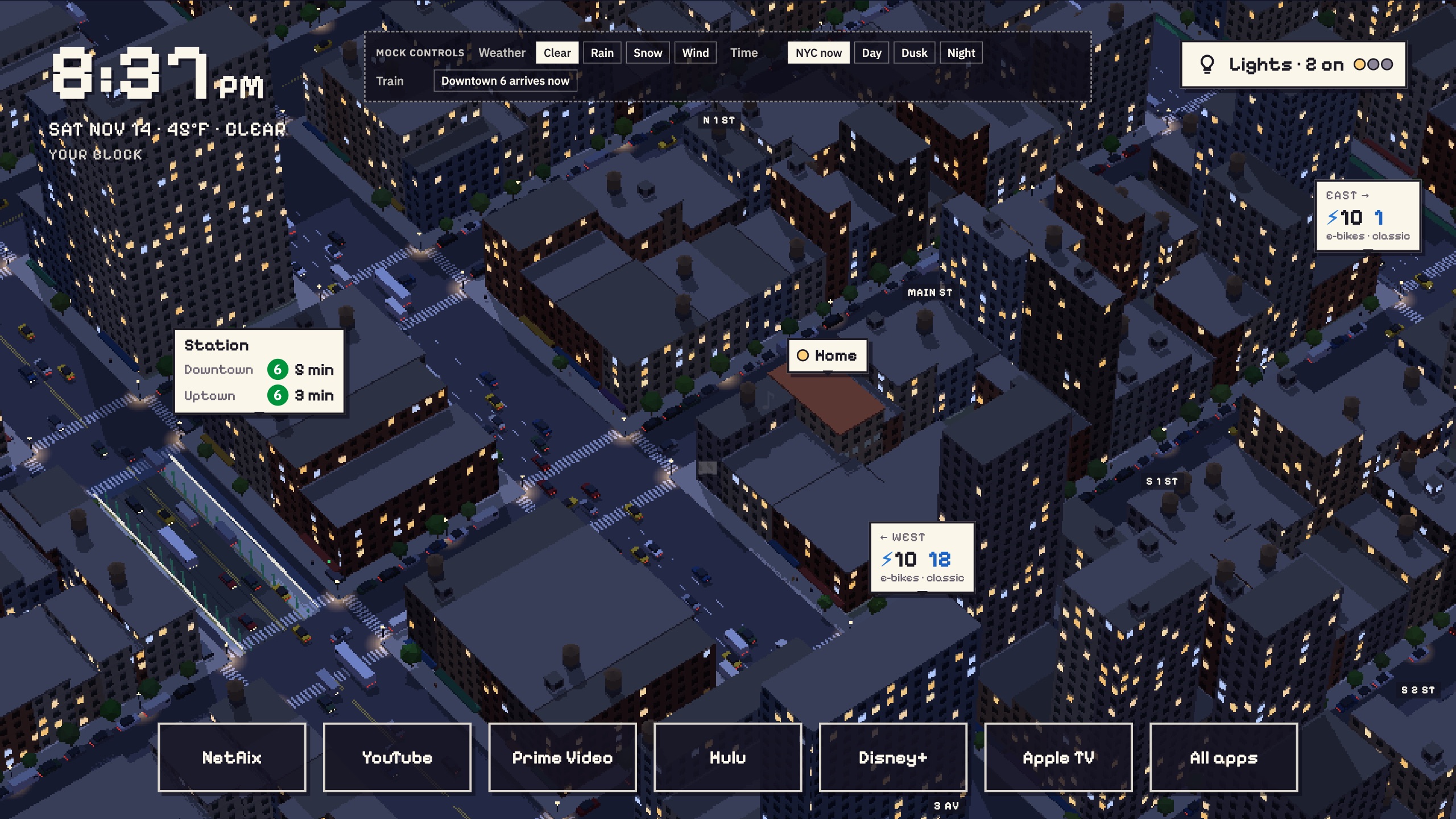
The block, with the generic street and mock data. My own street stays private.
Why
A TV home screen is full of ads and "recommended for you" rows. I wanted mine to show things that are true about my home right now: the lights, the music, the next train.
What it does
- The block. A live pixel-art model of my street, with traffic, people, and the weather.
- The subway. The nearest station, with live train times from the MTA feed.
- Citi Bike. Two docks, with live bike counts.
- My apartment in 3D. The lamps in the model match the real Hue lamps. I turn a lamp on from the remote, and it turns on in the room and in the model.
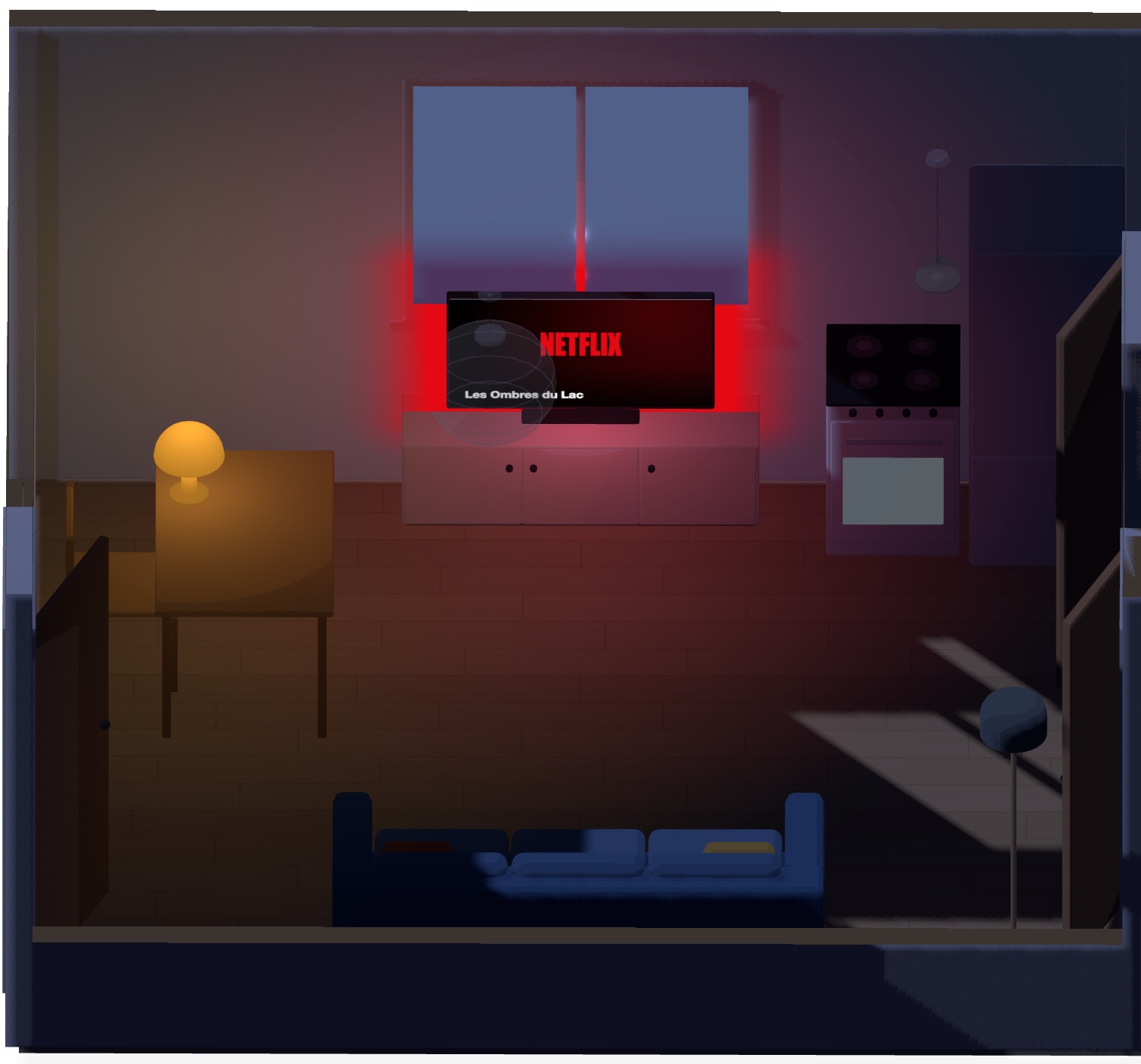
The demo apartment that comes with the project.
- Sonos. A sign next to the house shows what plays, with the cover as pixel art. A music panel has play, pause, skip, and a volume bar for each room.
- A dock of apps. The TV still opens the usual apps.
How it works
| Part | What it does |
|---|---|
| The scan | An iPhone with LiDAR scans the rooms, the walls, and the furniture. |
| The model | A low-poly model of the home, which I edit in the browser. |
| The bridge | A service on a machine at home. It reads Hue, Sonos, the MTA feed, and the Citi Bike feed, and gives the TV one live API. |
| The launcher | An Android TV app that replaces the home screen. It shows the block, the 3D model, the lights panel, and the dock. |
The stock Google TV home stays on the TV as a fallback. If the launcher fails, the Home key goes back to Google TV.
Privacy
The scan is the inside of my home. The scans, the scene, the tokens, and the device config stay out of git.